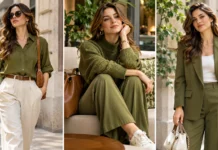


Choosing the right first day at work outfit can help you feel comfortable, prepared, and confident as you begin a new job. Whether you are joining a corporate office, creative agency, retail workplace, or technology company, your clothing should suit the environment and your daily responsibilities. A thoughtfully selected outfit allows you to focus on meeting colleagues and learning your new role.
The best first day at work outfits combine professional clothing, comfortable fabrics, and practical styling. Classic options include tailored trousers, blazers, button-down shirts, simple dresses, and smart casual separates. However, workplace dress codes vary, so understanding your employer’s expectations is more important than following one particular fashion trend.
This guide explores easy first day at work outfit ideas for different industries, seasons, and personal styles. You will also learn how to choose suitable colors, coordinate wardrobe essentials, select comfortable footwear, and avoid common styling mistakes. These practical tips can make preparing for your first working day much easier.
Why Your First Day at Work Outfit Matters
Your first day at a new job involves meeting colleagues, understanding workplace routines, and learning about your responsibilities. Choosing appropriate clothing can help you feel prepared for these activities. Although your outfit contributes to your overall presentation, your attitude, communication, and work performance remain more important.
Comfort is particularly important because your first day may involve walking around the workplace, attending orientation sessions, or sitting through meetings. Clothing that requires constant adjustment can become distracting. Selecting familiar, comfortable pieces helps you concentrate on the information being shared.
Planning your outfit also makes the morning easier to manage. When your clothes, shoes, and accessories are ready in advance, you have fewer decisions to make before leaving home. This preparation gives you additional time to review travel arrangements and organize any documents required by your employer.
How to Choose the Right Outfit for Your First Day
The first step is understanding the company’s dress code. Some workplaces expect formal business clothing, while others encourage business casual or relaxed everyday outfits. Your employment agreement, onboarding information, or conversations with the hiring team may provide useful guidance.
Consider the activities you will perform during your first working day. Office employees may spend most of their time at desks or in meetings, while retail workers may need clothing suitable for standing and moving. Choosing practical pieces helps ensure your outfit supports your responsibilities.
Personal preferences should also influence your clothing choices. You do not need to abandon your usual style to look professional. Instead, select familiar garments that fit the workplace environment and allow you to move comfortably throughout the day.
Classic First Day at Work Outfits With Blazers
A blazer is one of the most versatile pieces for creating professional work outfits. It can be combined with tailored trousers, skirts, dresses, or smart casual clothing. The structured design makes it useful when you want an outfit that suits meetings and office environments.
For a classic combination, wear a navy blazer with gray trousers and a light-colored shirt. A beige blazer paired with black trousers offers another simple option. These neutral combinations are easy to coordinate with different shoes and accessories.
Choose a blazer that allows comfortable movement around the shoulders and arms. You may need to sit, walk, or reach for items throughout the day. A comfortable blazer that suits your workplace is more practical than an expensive jacket that feels restrictive.
First Day at Work Outfits With Tailored Trousers
Tailored trousers are a reliable foundation for many professional outfits. They can be worn with button-down shirts, knitwear, blouses, and structured jackets. Their versatility makes them useful for building a small wardrobe that works across different office occasions.
For example, charcoal trousers with a white shirt create a simple business look. Beige trousers paired with a navy sweater offer a softer alternative. Adding loafers or other suitable footwear can complete the outfit without requiring complicated styling.
Consider the fabric and fit when choosing work trousers. Flexible materials and comfortable waistbands may be helpful during long working days. The goal is to find trousers that look appropriate while allowing you to sit and move naturally.
Business Formal Outfits for Your First Day
Business formal clothing is commonly associated with traditional corporate, financial, and legal workplaces. These environments may expect coordinated suits, tailored separates, or structured professional dresses. However, dress requirements differ between employers, even within the same industry.
A navy or charcoal suit paired with a plain shirt creates a familiar formal outfit. You can complete the look with suitable dress shoes and a practical work bag. Simple accessories can complement the clothing without making the overall combination overly complicated.
Formal work clothing does not need to be expensive or designer-made. Clean, well-maintained garments that meet the employer’s expectations are usually sufficient. Prioritize comfortable tailoring and practical footwear, particularly if your first day includes several meetings or workplace introductions.
Business Casual Outfit Ideas for a New Job
Business casual outfits combine professional clothing with a more relaxed approach. This dress code is common in many offices, educational organizations, and service-based companies. Suitable pieces may include chinos, tailored trousers, collared shirts, knit tops, and cardigans.
A pair of straight-leg trousers with a fine-knit sweater creates an easy business casual combination. Another option is a button-down shirt with chinos and loafers. A cardigan can provide an additional layer when the workplace is air-conditioned.
Business casual expectations are not identical across every company. Some organizations allow dark denim, while others prefer traditional office clothing. If the dress code is unclear, choosing slightly more structured pieces can be a practical starting point until you understand the workplace culture.
Smart Casual First Day at Work Outfits
Smart casual clothing is often suitable for creative agencies, technology companies, and workplaces with relaxed dress codes. It combines everyday wardrobe pieces with selected professional elements. The result can feel comfortable while still reflecting the purpose of the working day.
Dark jeans with a plain shirt and casual blazer may create a suitable outfit when denim is permitted. Chinos paired with a collared knit top are another versatile option. Clean sneakers or loafers can work depending on the company’s specific expectations.
Avoid assuming that smart casual means anything goes. Clothing should still be suitable for meetings, shared workspaces, and daily responsibilities. Reviewing onboarding instructions or asking the employer about the dress code can help you select an appropriate combination.
First Day at Work Outfits With Jeans
Jeans can be appropriate for a first working day when the employer has a relaxed or smart casual dress code. However, they may not be suitable for traditional business formal environments. Confirming workplace expectations is important before choosing denim.
If jeans are allowed, consider pairing them with a collared shirt, knit sweater, or blazer. Dark or evenly colored denim can be easy to coordinate with other wardrobe pieces. Choose a pair that feels comfortable and allows you to move naturally.
Avoid selecting jeans simply because they are familiar without considering the workplace setting. Some companies have specific policies involving denim styles or clothing condition. When uncertain, chinos or tailored trousers may offer greater versatility for your first day.
Professional Work Outfit Ideas With Dresses
Dresses provide a convenient option for creating a complete work outfit with fewer separate pieces. Shirt dresses, wrap-style dresses, and simple tailored designs can suit different professional environments. The best choice depends on your preferences, workplace expectations, and daily activities.
A navy dress with a lightweight blazer creates a classic office combination. For a business casual workplace, a comfortable knit dress with a cardigan may also work. Solid colors and understated patterns can simplify outfit coordination.
Choose a dress that allows comfortable movement while sitting, standing, and walking. Consider the fabric, fit, and temperature of the workplace. A familiar dress that already works well in your wardrobe may be more practical than buying a new one.
First Day at Work Outfits With Skirts
Skirts can be combined with shirts, sweaters, and jackets to create professional outfits. A-line, pleated, and straight-cut designs are common options. Their suitability depends on personal comfort, workplace requirements, and the overall styling.
For a traditional office, pair a tailored skirt with a button-down shirt and blazer. A pleated skirt with a fine-knit sweater may suit a business casual environment. Neutral colors make it easier to create coordinated combinations with existing wardrobe pieces.
Comfort should guide your choice of skirt. Make sure you can sit and walk without frequent adjustments. Selecting practical clothing is especially useful when your first day includes introductions, workplace tours, or training activities.
First Day at Work Outfits for Office Jobs
Office jobs often involve a mixture of desk work, meetings, and interactions with colleagues. Your clothing should reflect the employer’s expectations while remaining comfortable throughout the day. Tailored trousers, simple shirts, blazers, and suitable knitwear are common choices.
For example, black trousers with a light-colored shirt create a straightforward office outfit. A cardigan or blazer can provide additional structure when needed. Comfortable loafers, flats, or dress shoes may complete the look depending on the dress code.
Some offices maintain formal clothing expectations, while others allow casual attire. Your first day is an opportunity to observe how workplace policies are applied. However, employer guidance should take priority over assumptions based on photographs or general industry trends.
Outfit Ideas for Your First Day at a Creative Job
Creative workplaces often allow greater flexibility in clothing choices. Employees may express personal style through color, patterns, and different combinations of wardrobe pieces. However, the best outfit should still suit the organization and your specific responsibilities.
A patterned shirt with tailored trousers can create a distinctive professional combination. Another option is a colorful blazer with simple separates. Comfortable dresses, knitwear, and understated accessories can also work well in suitable creative environments.
Try to balance personal expression with practical considerations. Some creative roles involve client meetings, presentations, or production activities that require particular clothing. Researching the company and checking onboarding instructions can help you make an appropriate choice.
First Day at Work Outfits for Retail Jobs
Retail workplaces often require clothing that supports movement, standing, and customer interaction. Some employers provide uniforms or specific dress requirements. Others expect employees to wear suitable smart casual clothing that reflects the company’s environment.
A collared shirt with chinos or comfortable trousers can be a practical starting point when no uniform is required. Choose footwear suitable for standing and walking during your shift. Avoid assuming that every retail workplace follows the same clothing rules.
Before your first day, confirm whether the employer expects particular colors, shoes, or identification badges. Some workplaces require nonslip footwear or other safety-related items. Following these instructions is more important than creating a fashionable outfit.
Comfortable Outfits for Long Working Days
Your first working day may include several hours of training, introductions, and unfamiliar routines. Wearing comfortable clothing can make these activities easier. Breathable fabrics, practical layers, and suitable shoes are helpful when you are unsure how the day will unfold.
A pair of comfortable trousers with a soft collared shirt offers a versatile combination. You can add a lightweight cardigan or blazer when needed. Choosing familiar pieces reduces the likelihood of discovering unexpected fit problems during the day.
Consider the workplace temperature and your commute when preparing your outfit. Air-conditioned offices may feel cool even when outdoor temperatures are warm. Removable layers allow you to adjust your clothing without needing an entirely different outfit.
Best Colors to Wear on Your First Day at Work
Neutral colors such as navy, gray, black, beige, and white are easy to combine in professional outfits. These shades work with many wardrobe basics and can simplify morning preparation. However, professional clothing does not have to be limited to neutral colors.
Blue, green, burgundy, and other shades can also work well when they suit the workplace setting. A colored shirt or sweater may add personality to an otherwise simple combination. Patterns can be appropriate when they fit the organization’s dress expectations.
There is no universal color that guarantees a better first impression at work. Choose shades that you enjoy wearing and that coordinate with your existing clothing. Comfort, preparation, and professional behavior matter far more than selecting one particular color.
Best Shoes for Your First Day at Work
Footwear is an important part of a practical work outfit. The best shoes depend on your responsibilities, workplace environment, and expected activities. Loafers, flats, dress shoes, and suitable sneakers are common options across different dress codes.
For an office role, comfortable loafers or other professional footwear may work well. Retail and service positions may require shoes designed for extended standing or specific safety conditions. Always follow workplace requirements when protective or nonslip footwear is necessary.
Avoid wearing unfamiliar shoes for the first time if they might cause discomfort. Test your selected pair before your starting day. Comfortable footwear can make commuting, workplace tours, and long periods of standing much easier to manage.
How to Accessorize Your First Day Work Outfit
Accessories can help coordinate a work outfit while providing practical everyday functions. Watches, scarves, belts, and simple jewelry are common examples. However, accessories are optional, and professional clothing can look complete without them.
A comfortable bag is particularly useful for carrying documents, a notebook, identification, and other essentials. Choose a size that suits your work requirements without becoming difficult to carry. A simple belt or scarf may also help coordinate separate clothing pieces.
Avoid accessories that create unnecessary noise or require frequent adjustment during meetings. Keep your selections comfortable and suitable for the workplace. Preparing accessories alongside your outfit can also reduce last-minute decisions on your first morning.
First Day at Work Outfits for Summer
Summer work outfits should balance professional expectations with warmer temperatures. Lightweight trousers, breathable shirts, and simple dresses are useful options. Choosing suitable fabrics can help maintain comfort during commuting and indoor activities.
A cotton shirt with lightweight tailored trousers creates a practical summer office outfit. A linen-blend blazer may provide structure without excessive bulk. However, some lightweight fabrics wrinkle easily, so consider their appearance after traveling to work.
Indoor temperatures may differ significantly from outdoor conditions, especially in air-conditioned buildings. Bringing a lightweight cardigan or jacket can help you adjust. Select clothing that remains appropriate for the employer’s dress code without requiring unnecessarily heavy layers.
First Day at Work Outfits for Winter
Winter work outfits require suitable layering to maintain comfort during travel and indoor activities. Wool-blend trousers, knit sweaters, collared shirts, and structured coats are practical pieces. Combining layers allows you to adjust to changes in temperature throughout the day.
A fine-knit sweater over a collared shirt creates a familiar business casual look. Add tailored trousers and comfortable footwear to complete the outfit. For more formal workplaces, a blazer or coordinated suit may be appropriate beneath a winter coat.
Consider outdoor weather when choosing shoes and accessories. Rain, snow, or icy conditions may require practical commuting footwear. If necessary, you can bring appropriate indoor shoes, provided the workplace offers a convenient place to change.
Budget-Friendly First Day at Work Outfit Ideas
Preparing for a new job does not require purchasing an entirely new wardrobe. Begin by reviewing clothing you already own for pieces that meet the workplace dress code. A clean shirt, comfortable trousers, and suitable shoes may provide everything you need.
If additional items are necessary, consider versatile pieces that can be worn in several combinations. Secondhand shops, clothing exchanges, and borrowing suitable garments may also reduce costs. Focus on filling genuine gaps rather than buying clothing simply because it is new.
Maintaining existing garments can improve their appearance without major expenses. Washing, appropriate ironing, and checking for small repairs help keep clothes ready for work. A practical, affordable outfit can be entirely suitable for your first day.
How to Build a Small Workwear Capsule Wardrobe
A workwear capsule wardrobe consists of a limited collection of versatile clothing pieces that coordinate easily. It can simplify outfit planning and reduce unnecessary shopping. Common items include tailored trousers, collared shirts, knitwear, a blazer, and suitable footwear.
Start with clothing that already fits comfortably and meets your employer’s expectations. For example, two pairs of trousers and several interchangeable tops can create multiple outfits. A neutral jacket or cardigan provides additional flexibility.
Your capsule wardrobe should reflect your job responsibilities and workplace dress code. Someone working in a formal office may need different clothing from someone in a creative or retail environment. Choose pieces based on actual needs rather than following a fixed fashion formula.
Common First Day at Work Outfit Mistakes to Avoid
One common mistake is choosing clothing without checking the employer’s dress code. An outfit that works in a creative office may not suit a traditional corporate workplace. Reviewing onboarding information can prevent unnecessary uncertainty.
Another mistake is prioritizing appearance while ignoring comfort. Clothing that restricts movement or shoes that cause discomfort can become distracting during a long day. Trying on your complete outfit beforehand helps identify potential problems.
Last-minute clothing decisions can also create unnecessary stress. Preparing your outfit, bag, and other essentials the night before makes the morning easier. Instead of focusing on complicated styling, concentrate on arriving prepared and ready to learn.
What to Prepare the Night Before Your First Day
Begin by selecting your complete outfit, including shoes, outerwear, and any required accessories. Check that each item is clean and suitable for the workplace. Trying on the combination can help confirm that everything fits comfortably.
Next, organize any documents or supplies requested by your employer. These may include identification, employment paperwork, a notebook, or other onboarding materials. Follow the company’s instructions regarding what you should bring.
Finally, confirm your starting time, workplace location, and transportation arrangements. Allow reasonable time for unexpected travel delays. Preparing these details in advance helps you approach your first day with greater confidence and fewer distractions.
How to Feel Confident in Your First Day Outfit
Confidence in your work outfit often comes from feeling comfortable and knowing that your clothing suits the environment. Choose familiar pieces that allow you to move naturally. You do not need to follow every fashion trend to create an appropriate professional appearance.
Preparing ahead of time can reduce uncertainty about what to wear. If the employer’s dress code remains unclear, contacting the hiring team for guidance is reasonable. Having accurate information makes clothing decisions much easier.
Remember that starting a new job involves learning, asking questions, and meeting people. Your clothing can support the occasion, but it does not determine your professional abilities. Focus on being punctual, attentive, and willing to learn as you begin your new role.
Conclusion
Choosing the right first day at work outfit involves balancing professional expectations, comfort, and personal preferences. Whether you select formal business clothing, smart casual separates, or a practical workplace uniform, your outfit should support your responsibilities. There is no single combination that works for every employee or organization.
Versatile wardrobe basics such as tailored trousers, comfortable shirts, blazers, knitwear, and suitable shoes can make outfit planning easier. Preparing clothing in advance also helps reduce unnecessary stress. You do not need expensive garments or complicated accessories to look appropriate for your workplace.
Your first day is an opportunity to meet colleagues, understand expectations, and begin learning your role. Choose clothing that fits the environment and allows you to concentrate on these experiences. A comfortable, thoughtfully prepared outfit can help you start your new job feeling ready for the day ahead.
Frequently Asked Questions About First Day at Work Outfits
What Should I Wear on My First Day at Work?
Choose clothing that matches your employer’s dress code and feels comfortable. Tailored trousers, a collared shirt, a blazer, or suitable business casual separates are versatile options for many workplaces.
Can I Wear Jeans on My First Day at Work?
Yes, jeans may be appropriate if your workplace allows casual or smart casual clothing. Check the dress code first and choose a comfortable, well-maintained pair when denim is permitted.
What Colors Are Best for First Day at Work Outfits?
Navy, gray, black, beige, and white are easy-to-coordinate choices. However, other colors can also be professional when they suit the workplace and your personal preferences.
Should I Dress Formally on My First Day at Work?
It depends on the employer’s expectations. Formal business clothing may be suitable for traditional corporate workplaces, while technology companies and creative offices may allow business casual or smart casual outfits.
How Can I Look Professional at Work on a Budget?
Start with clean, comfortable clothing you already own. Combine versatile basics, consider suitable secondhand options, and prioritize workplace requirements instead of purchasing an expensive new wardrobe.