
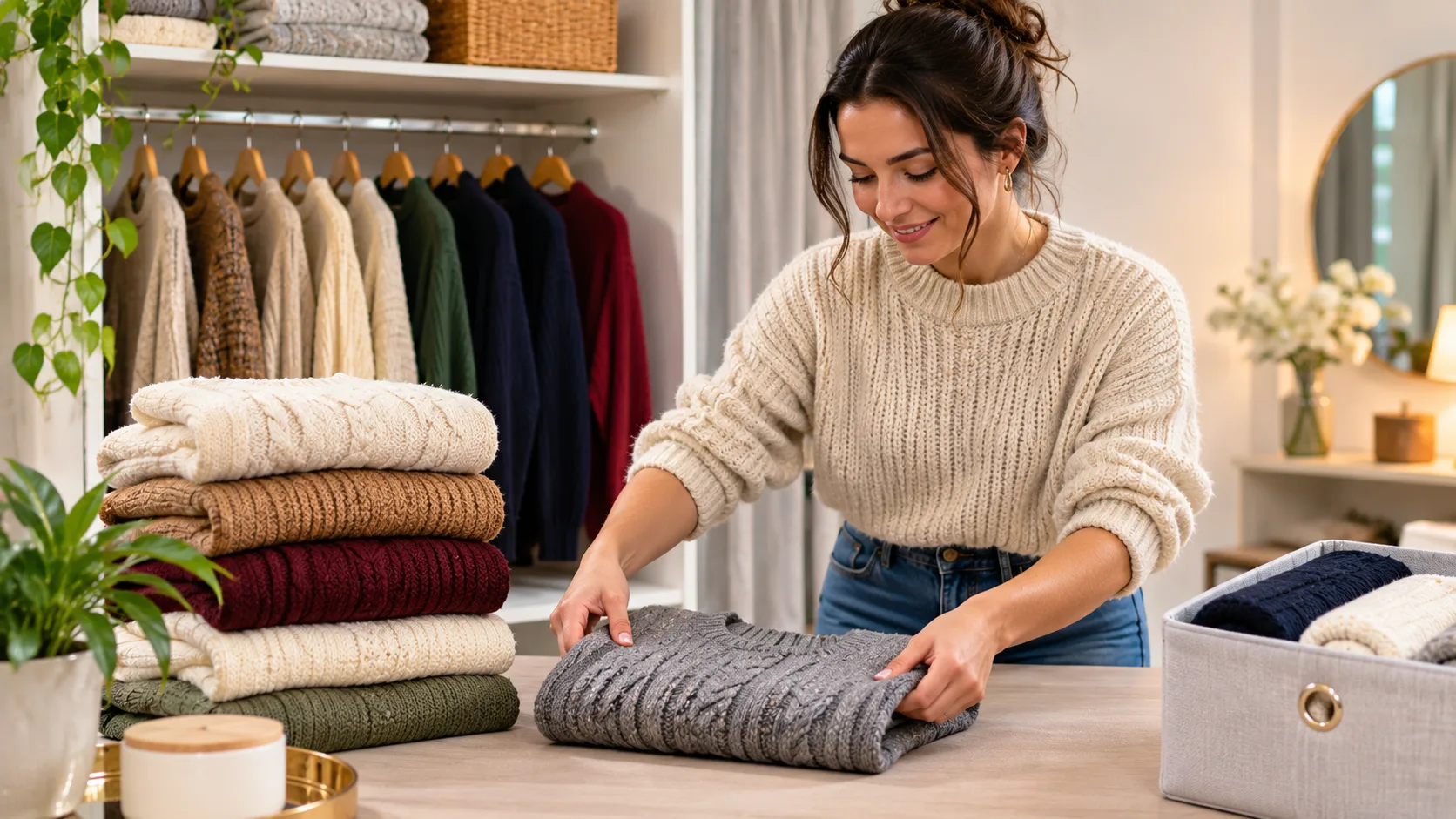
Knowing how to fold sweaters properly can make a big difference in how your clothes look, feel, and last. Sweaters are comfortable, versatile wardrobe essentials, but they need careful handling to maintain their shape. Incorrect folding can create unwanted creases, stretch delicate fabrics, and make your closet look cluttered.
Whether you own chunky knit sweaters, lightweight cardigans, cashmere pieces, or everyday pullovers, the right folding technique helps keep them organized. Proper storage also makes it easier to find your favorite outfits without disturbing the rest of your wardrobe. With a few simple steps, you can create a neat and practical clothing arrangement.
Folding sweaters is not difficult, but different materials may require slightly different approaches. Understanding fabric care, storage methods, and common mistakes can help protect your favorite knitwear. This guide explains how to fold sweaters for drawers, shelves, travel, and seasonal storage while keeping them ready to wear.
Why Learning How to Fold Sweaters Matters
Sweaters are often made from knitted fabrics that can stretch when unsupported. Hanging heavy knitwear for extended periods may pull the shoulders downward and change the garment’s natural shape. Folding provides support across the fabric and reduces unnecessary tension on delicate fibers.
Proper folding also helps you make better use of available storage space. Instead of stacking sweaters randomly, organized folds create manageable shapes that fit neatly into drawers or shelves. This makes it easier to see your clothing collection and select outfits without creating unnecessary mess.
Another benefit is reducing unwanted creases and fabric stress. Careful folding prevents excessive compression and helps maintain the overall appearance of knitwear. Although some wrinkles are unavoidable, selecting the right technique and storage location can keep sweaters looking more presentable between wears.
How to Fold a Sweater the Basic Way
The basic folding method works well for most everyday sweaters. Start by placing the garment face down on a clean, flat surface. Smooth the fabric gently with your hands, making sure the shoulders, sleeves, and hem are positioned evenly before creating the first fold.
Fold one side of the sweater inward toward the center, bringing the sleeve across the back. Repeat the process on the opposite side so both edges form a neat rectangular shape. Adjust the sleeves carefully to prevent bulky sections or unnecessary folds around the shoulder seams.
Finally, bring the bottom hem upward toward the neckline, folding the sweater in half. For longer garments, an additional fold may create a more compact shape. Avoid pressing down too firmly because excessive compression can flatten textured knitwear and create stubborn creases.
How to Fold Sweaters for Drawers
Drawer storage works best when sweaters are folded into compact, consistent shapes. Begin by laying each garment flat and folding the sleeves inward. Bring the sides toward the center until the sweater forms a narrow rectangle that fits comfortably within your drawer.
Next, fold the sweater into two or three sections, depending on its length and thickness. The finished garment should stand upright or rest securely without excessive pressure. This vertical folding method allows you to view several sweaters at once instead of searching through a tall stack.
Arrange folded sweaters by color, material, or frequency of use. Keeping heavier garments separate from delicate knitwear can prevent unnecessary compression. Drawer organizers may also help maintain neat sections, especially when storing lightweight sweaters that tend to shift during everyday use.
How to Fold Sweaters for Closet Shelves
Closet shelves provide a convenient storage option for sweaters that are too bulky for drawers. Begin with the basic folding method, creating an even rectangle with sleeves tucked neatly inside. Keep the finished shape wide enough to support the garment without introducing too many folds.
Place heavier sweaters near the bottom of each stack and lighter pieces above them. Avoid building excessively tall piles because removing a garment from the middle can disturb the entire arrangement. Smaller, organized stacks are generally easier to maintain and help prevent unnecessary pressure.
Shelf dividers can provide additional support when storing several sweaters together. They keep separate stacks from leaning into one another and help create a tidy appearance. Leaving some open space around folded garments also makes it easier to remove and replace items without stretching them.
How to Fold Chunky Knit Sweaters
Chunky knit sweaters require special attention because their thick yarns create additional bulk. Start by placing the sweater face down on a large, clean surface. Smooth the garment gently without pulling the knit fabric, as excessive stretching can distort the original shape.
Fold the sleeves inward and bring the sides toward the center, creating a loose rectangle. Avoid making too many tight folds because thick knitwear may become compressed or develop noticeable creases. One broad fold from the hem toward the neckline is often sufficient.
Store chunky sweaters in spacious drawers or on sturdy closet shelves. Avoid placing heavy objects on top of them, particularly when the knit pattern is highly textured. Allowing enough room helps preserve the sweater’s natural loft and makes it easier to maintain its comfortable appearance.
How to Fold Cashmere Sweaters Properly
Cashmere sweaters are valued for their softness, warmth, and lightweight feel. Their delicate fibers benefit from gentle handling during folding and storage. Start by placing the sweater on a clean surface and smoothing it carefully without stretching the neckline, cuffs, or shoulder areas.
Fold each sleeve inward along the body of the sweater, then bring the sides toward the center. Finish with one or two loose folds depending on the garment’s size. Avoid creating overly tight bundles because unnecessary pressure may contribute to creases and flatten the fabric.
Store clean, dry cashmere sweaters in a cool, dry location away from direct sunlight. Breathable storage materials can help protect garments while allowing appropriate airflow. For longer storage periods, use suitable moth-prevention practices and avoid placing delicate cashmere beneath heavy clothing.
How to Fold Wool Sweaters Without Stretching Them
Wool sweaters provide excellent warmth and comfort, but their knitted construction requires careful handling. Begin by placing the garment on a flat surface and arranging the sleeves naturally. Avoid pulling the fabric to remove wrinkles because stretching can affect the garment’s shape.
Bring the sides inward while keeping the shoulder seams aligned. Fold the sleeves neatly across the back, then bring the bottom hem upward. The goal is to create a balanced shape without placing excessive tension on any particular section of the sweater.
Store wool sweaters away from moisture and excessive heat. Make sure garments are completely dry before folding them, since damp storage can encourage unpleasant odors or mildew. Clean knitwear and suitable storage protection can also help reduce the risk of fabric damage from clothes moths.
How to Fold Cardigan Sweaters
Cardigans require a slightly different approach because they have an open front and may include buttons or zippers. Start by closing the buttons or fastening the zipper, provided doing so does not place tension on the fabric. This helps maintain the cardigan’s shape during folding.
Place the cardigan face down and smooth the sleeves along the back. Fold both sides inward evenly, keeping the front opening aligned. Bring the bottom section upward toward the neckline, creating a neat rectangle that is easy to store.
For delicate buttoned cardigans, avoid placing excessive pressure directly over decorative buttons. Lightweight designs can be stored in drawers, while thicker styles may fit better on shelves. Keeping cardigans folded also helps prevent shoulder stretching that can occur when heavy knitwear hangs for long periods.
How to Fold Oversized Sweaters
Oversized sweaters provide relaxed comfort, but their generous dimensions can make storage challenging. Begin by spreading the garment across a large surface so the sleeves and body lie flat. Smooth out twisted sections before folding to create an even shape.
Fold the sleeves inward and bring both sides toward the center until the sweater becomes a manageable rectangle. Depending on the garment’s length, fold the bottom upward once or twice. Avoid forcing the sweater into an excessively small bundle because this can create unnecessary bulk.
Large sweaters generally need more storage space than fitted knitwear. Consider placing them on shelves or inside spacious drawers rather than tightly packed compartments. Keeping oversized garments organized by season can also reduce clutter and make your everyday wardrobe easier to manage.
How to Fold Sweaters for Travel
Packing sweaters carefully can help reduce wrinkles and make better use of suitcase space. Start by laying the garment flat and folding the sleeves inward. Bring the sides toward the center, creating a rectangular shape that fits neatly into your luggage.
For thicker sweaters, a traditional flat fold often preserves their shape better than tight rolling. Lightweight knitwear may be loosely rolled if the fabric tolerates it. Place folded sweaters near the bottom or middle of your suitcase, where they can remain supported during travel.
Packing cubes can help separate sweaters from shoes, accessories, and other clothing. Choose appropriately sized cubes rather than compressing delicate knitwear excessively. When you arrive at your destination, unpack your sweaters promptly to help reduce travel-related creases.
How to Fold Sweaters Using the KonMari Method
The KonMari folding approach focuses on creating compact garments that can stand upright inside drawers. Begin by laying the sweater flat and smoothing its surface. Fold each side inward, positioning the sleeves neatly to create a long, narrow rectangle.
Fold the bottom portion upward, then divide the remaining length into smaller sections. Adjust the number of folds according to the sweater’s thickness. The final shape should stand upright without needing excessive pressure or stretching.
This technique works particularly well for lightweight and medium-weight sweaters. Very chunky or delicate knitwear may be better suited to broader folds and shelf storage. Choosing a method based on fabric weight helps maintain organization without compromising garment care.
How to Store Folded Sweaters Without Wrinkles
Preventing wrinkles begins with folding sweaters when they are clean and completely dry. Damp or warm garments may develop creases when compressed inside drawers or shelves. Allow sweaters to cool and dry naturally before putting them away.
Avoid overcrowding storage areas because tightly packed clothing experiences more pressure and friction. Leave enough space to remove individual garments without pulling against neighboring items. Keeping folds consistent can also reduce awkward creasing and help maintain a neater appearance.
If a sweater develops minor wrinkles, allow it to rest flat before wearing. Gentle steaming may help some fabrics, but always check the care label first. Delicate wool and cashmere garments require particular caution because excessive heat or moisture may damage their fibers.
Should You Fold or Hang Sweaters?
Folding is generally the preferred storage method for most sweaters, especially heavy or loosely knitted garments. Hanging can place continuous pressure on the shoulders and neckline. Over time, this may create stretched areas or unwanted bumps where the garment rests on the hanger.
Lightweight, tightly knitted sweaters may tolerate occasional hanging better than heavy knitwear. However, fabric weight, construction, and hanger design all influence the results. When space allows, folding remains a practical way to support the garment evenly during storage.
If hanging is necessary for a short period, avoid narrow hangers that concentrate pressure on the shoulders. Some garments can be draped carefully over a padded hanger instead. Always consider the fabric’s care instructions and how long the sweater will remain in storage.
Best Ways to Organize Folded Sweaters
Organizing sweaters by category helps make your wardrobe easier to use. You might separate everyday pullovers, cardigans, chunky knits, and lightweight layering pieces. This arrangement allows you to find suitable clothing quickly without searching through unrelated items.
Color organization can also create a visually appealing wardrobe. Placing similar shades together makes it easier to coordinate outfits and identify gaps in your clothing collection. However, frequency of use should remain important because your favorite sweaters should be easily accessible.
Seasonal organization provides another practical solution for limited closet space. Store frequently worn sweaters in convenient drawers or shelves and move off-season garments to suitable storage areas. Using breathable containers and keeping clothing clean can help preserve fabric quality between seasons.
How to Fold Sweaters for Seasonal Storage
Seasonal storage requires additional preparation because sweaters may remain unused for several months. Begin by cleaning each garment according to its care label. Food residue, body oils, and other invisible stains can attract pests or become harder to remove during extended storage.
Fold sweaters loosely and arrange them in clean, dry storage containers. Breathable fabric bags or suitable containers can help protect clothing from dust. Avoid storing knitwear in damp basements, excessively hot spaces, or areas exposed to direct sunlight.
Choose a storage location with stable conditions whenever possible. Periodically inspect stored garments for moisture, odors, or signs of fabric damage. Proper preparation helps your sweaters remain fresh and ready to wear when cooler weather returns.
Common Mistakes to Avoid When Folding Sweaters
One common mistake is folding sweaters while they are damp. Moisture trapped inside fabric layers may contribute to unpleasant odors, mildew, or unwanted creases. Always confirm that garments are thoroughly dry before storing them in enclosed drawers or containers.
Another mistake involves creating excessively tight folds. Compressing chunky knitwear can flatten textured patterns and make garments difficult to unfold neatly. Gentle, even folds are generally more suitable for preserving the natural appearance of delicate and bulky sweaters.
Overloading shelves and drawers can also reduce organization and place unnecessary pressure on clothing. Large stacks may become unstable, while crowded drawers can stretch garments when they are removed. Leaving adequate space helps maintain sweater shape and makes wardrobe management easier.
How to Keep Sweaters Looking New for Longer
Proper sweater care begins with following fabric-specific washing and drying instructions. Wool, cashmere, cotton, and synthetic blends respond differently to moisture, heat, and agitation. Checking care labels helps prevent shrinkage, stretching, and other damage during routine cleaning.
Avoid washing sweaters unnecessarily when they are still clean and fresh. Airing suitable garments between wears can help reduce odors, while spot cleaning may address minor marks. However, always clean sweaters before extended storage to avoid attracting pests or allowing stains to settle.
Folding and storing sweaters carefully completes the care routine. Keep heavy knitwear supported, protect delicate fabrics from friction, and avoid direct sunlight during storage. These simple habits can help extend garment life while keeping your favorite sweaters comfortable and presentable.
How to Style Folded Sweaters for Everyday Outfits
A well-organized sweater collection makes everyday outfit planning easier. Lightweight knitwear can be paired with tailored trousers, jeans, or skirts for versatile casual looks. Neutral colors such as beige, gray, cream, and navy offer flexibility when combining different wardrobe pieces.
Chunky sweaters can create comfortable outfits when paired with streamlined bottoms. For example, a textured pullover works well with straight-leg jeans or simple trousers. Choosing complementary colors and comfortable proportions helps create a balanced appearance without complicated styling.
Cardigans offer additional versatility because they can be worn open or fastened. Layering them over simple tops or shirts creates practical outfits for changing temperatures. Keeping sweaters neatly folded helps you quickly identify suitable colors, textures, and styles when planning what to wear.
Conclusion
Learning how to fold sweaters properly is a simple way to improve wardrobe organization and maintain clothing quality. Different sweater materials require slightly different folding techniques, but the main goal remains the same. Gentle handling and even folds help prevent stretching, excessive creasing, and unnecessary fabric stress.
Whether you prefer drawer storage, closet shelves, or seasonal containers, choosing the right method can make your wardrobe easier to manage. Lightweight sweaters may benefit from vertical folding, while bulky knitwear often needs wider folds and additional space. Careful organization also helps you find clothing quickly.
Regular fabric care and thoughtful storage can keep sweaters looking attractive for longer. Cleaning garments before storage, avoiding excessive compression, and protecting delicate knitwear are important habits. With a consistent folding routine, your sweaters can remain organized, comfortable, and ready for everyday styling.
Frequently Asked Questions
What is the best way to fold sweaters?
The best method is to lay the sweater flat, fold both sleeves inward, bring the sides toward the center, and fold the bottom upward. Adjust the number of folds according to fabric thickness.
Is it better to fold or hang sweaters?
Folding is generally better for sweaters because it supports their weight and reduces shoulder stretching. Heavy wool and chunky knitwear especially benefit from flat storage rather than prolonged hanging.
How do you fold sweaters to save drawer space?
Fold each sweater into a narrow rectangle and divide it into smaller sections so it can stand upright. This method improves visibility and organization, especially for lightweight and medium-weight knitwear.
How do you fold chunky sweaters without wrinkles?
Lay the sweater flat, fold the sleeves inward, and use one or two broad folds. Avoid tight compression and store bulky knitwear on spacious shelves or inside large drawers.
Can you roll sweaters instead of folding them?
Yes, some lightweight sweaters can be loosely rolled for travel or compact storage. However, delicate cashmere and thick knitwear generally benefit from gentle flat folding to avoid unnecessary pressure and creasing.